

Latest Releases
U.S. Senators Smith, Padilla, Tillis, Ernst Launch Bipartisan Mental Health Caucus
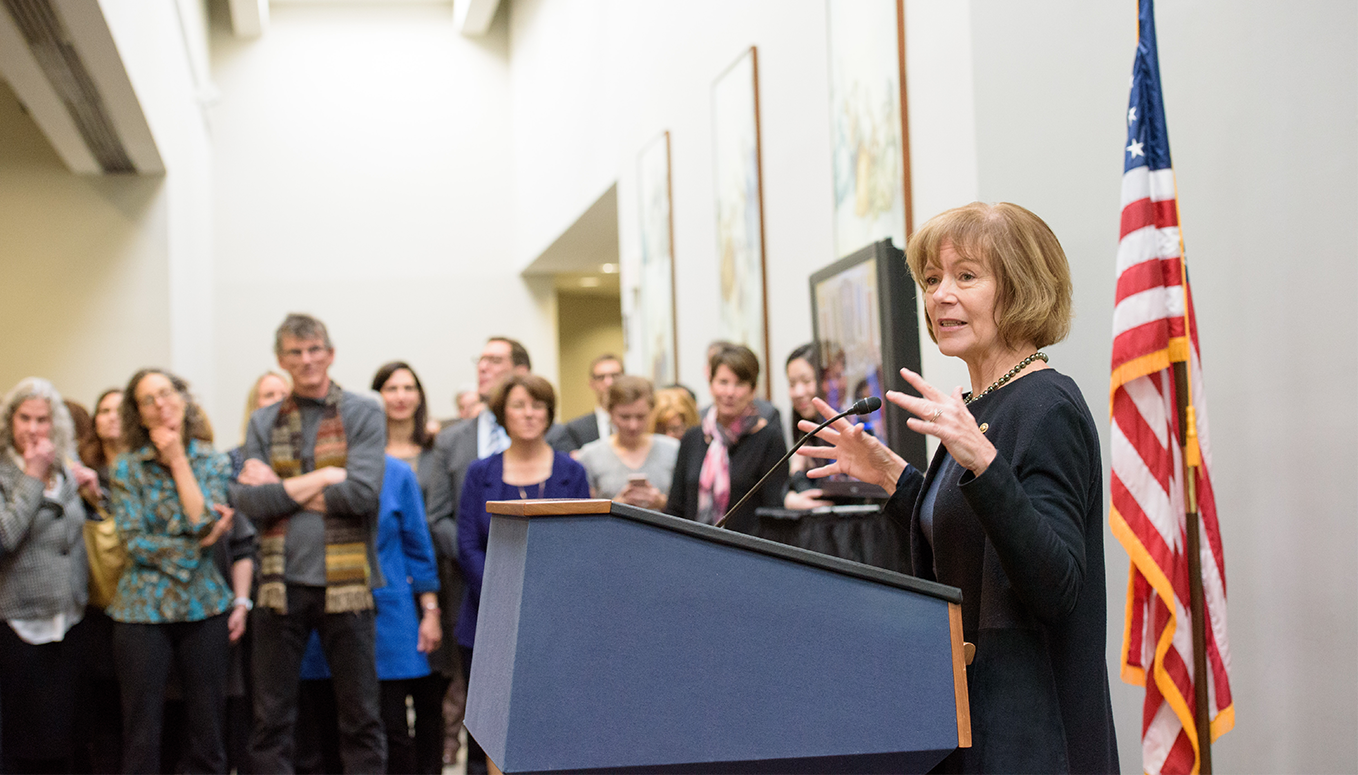
WASHINGTON, D.C. — Today, U.S. Senators Tina Smith (D-Minn.), Alex Padilla (D-Calif.), Thom Tillis (R-N.C.), and Joni Ernst (R-Iowa) announced the launch of their bipartisan Senate Mental Health Caucus. Amidst a national mental health crisis, the Senate Mental Health Caucus will serve as a forum for Senators to collaborate on and promote bipartisan legislation and solutions, hold events to raise awareness of critical mental health issues, and destigmatize mental health. The caucus will work to improve prevention and early intervention efforts, expand the country’s mental health professional workforce, enhance our nation’s crisis response services, and increase access to evidence-based mental health treatment and common-sense solutions for all Americans. Daniel Gillison, Jr., Chief Executive Officer of the National Alliance on Mental Illness (NAMI) and Laurel Stine, Vice President of the American Foundation for Suicide Prevention (AFSP), joined the Senators in announcing the launch. U.S. Senators Cory Booker (D-N.J.), Shelley Moore Capito (R-W.Va.), Susan Collins (R-Maine), John Fetterman (D-Pa.), Amy Klobuchar (D-Minn.), and Lisa Murkowski (R-Alaska) are also members of the caucus. “I believe that everyone should have access to quality mental health care, regardless of insurance, ZIP code, or age,” said Senator Smith. “Mental health care isn’t a partisan issue – it’s something that affects Americans in red states and blue states alike. Today’s launch represents a renewed commitment and focus to collaborate on bipartisan legislation and solutions. I’m looking forward to working alongside my colleagues to continue to tackle the mental health care crisis in this country.” “Our nation has long faced mounting mental health challenges that have touched the lives of all Americans, but we know there are bipartisan
U.S. Senators Klobuchar, Smith Announce Federal Disaster Loans for Minnesotans Affected by Drought
Washington [10/16/23] — Today, U.S. Senators Amy Klobuchar and Tina Smith (both D-Minn.) announced federal loans designed to help small businesses, agricultural cooperatives, and nonprofit organizations in Minnesota recoup losses as a result of this summer’s drought. These federal Economic Injury Disaster Loans (EIDLs) are available in Murray and Nobles counties and the contiguous counties of Cottonwood, Jackson, Lyon, Pipestone, Redwood, and Rock Minnesota. “This summer’s drought affected everyone from farmers and ranchers to local business owners,” said Klobuchar. “These federal loans will provide relief and ensure farms and businesses get the support they need as they continue to recover. I encourage everyone eligible to get in touch with the Small Business Administration to learn more and apply.” “Climate-fueled extreme weather events, like the drought we experienced in Minnesota this summer, are becoming more and more common. We need to be doing everything we can to support those impacted and limit the economic toll they take,” said Sen. Smith. “These federal loans will help sustain local businesses and farms as they deal with the fallout from the drought. I encourage eligible businesses, farms and nonprofits to contact the Small Business Administration and apply before the May 29th deadline.” The Economic Injury Disaster Loan program is available to eligible farm-related and nonfarm-related entities that suffered financial losses as a direct result of this disaster. EIDLs are available through the Small Business Administration (SBA), and can be used to pay fixed debts, payroll, and other bills that could have been paid if
U.S. Senator Tina Smith Delivers Weekly Democratic Address
Washington, D.C. – As many Republicans in Congress refuse to accept the facts about climate change, Senator Tina Smith (D-MN)—a member of Senate Democrats’ new Special Committee on the Climate Crisis announced Wednesday—delivers this week’s Weekly Democratic Address. In the address, Smith begins by addressing recent news and underscoring the importance of releasing the entire Mueller report to the American people. Smith goes on to highlight the new Special Committee on the Climate Crisis, efforts underway to tackle the climate crisis, and outlines how America can either follow or lead on climate change. She closes by saying that Democrats think the
Sen. Tina Smith Sworn in to Serve Minnesota in US Senate
U.S. Senator Tina Smith was sworn in to serve the state of Minnesota in the United States Senate. Photos of the ceremonial swearing-in are attached and you can watch video here. “Every time I talk about Minnesota I feel incredible pride—in our communities and community leaders, in hard-working families, in farmers and businesses, and in all the women, men, and children who call our great state their home,” said Sen. Smith. “I’m thinking about all of those people—and the weight of this seat, which carries a long progressive legacy that I intend to uphold—as I begin representing Minnesota in the U.S. Senate. “I want to thank everybody who joined me today, including my husband Archie, our sons Mason
Sen. Tina Smith Fights for Minnesota in First Weekend as U.S. Senator
Back in Washington after a productive trip home to Minnesota, U.S. Senator Tina Smith said she plans to take what she learned from her first weekend as Senator and use it to continue fighting for Minnesota’s priorities. Over the weekend, Sen. Smith made several stops—which you can read more about here—on her way from the metro area to Duluth and the Iron Range and back. “What a great first weekend as Senator,” said Sen. Smith. “The stops I made, and meetings I held, and Minnesotans I met really drove home what a big, diverse, welcoming state Minnesota is. I’m excited to hit the ground
Sen. Tina Smith Throws Support Behind Proposal to Restore Net Neutrality
U.S. Senator Tina Smith backed a Senate effort to restore the national net neutrality protections that were recently gutted by President Trump’s Federal Communications Commission (FCC). “Net neutrality is the basic—but important—principle that what we read, view, and watch on the internet is free and open to everybody,” said Sen. Smith. “And that principle has long allowed for the internet to be a pillar of innovation that powers our modern economy. Tearing up net neutrality gives giant internet service providers the ability to pick and choose how Minnesota families, schools, and businesses use the internet. We can’t let that happen, which is why I’m backing the effort to restore the net neutrality protections that millions
 English